
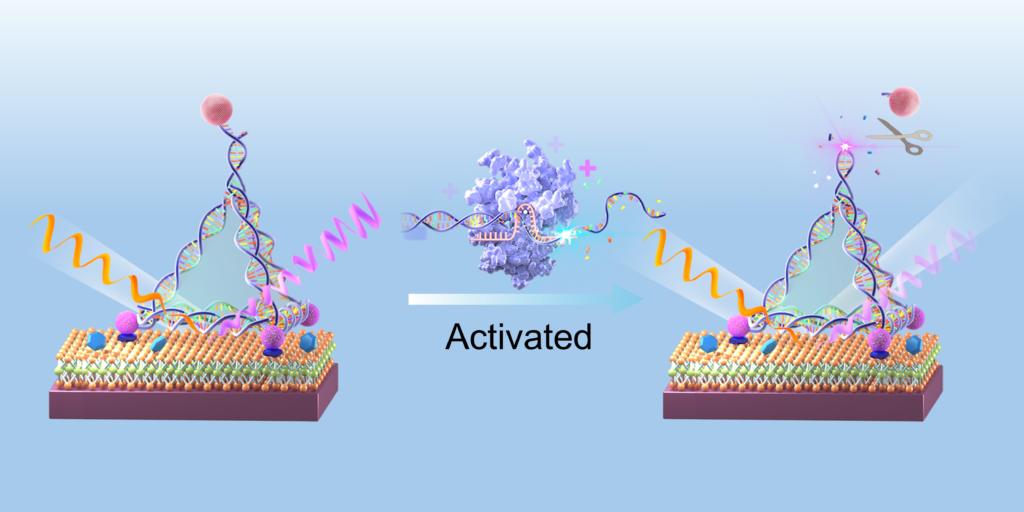
A research team led by scientists at Shenzhen University has created a highly sensitive light‑based biosensor capable of detecting extremely low concentrations of cancer biomarkers in blood, offering a potential route to earlier and simpler cancer diagnosis. The system combines DNA nanostructures, quantum dots, and CRISPR Cas12a activity to generate a measurable optical signal using a technique known as second harmonic generation. When a target biomarker is present, Cas12a cuts DNA strands that hold the quantum dots in place, causing a detectable drop in the optical signal. This mechanism allows the sensor to identify biomarkers at concentrations far below what conventional assays can measure.
Early detection of cancer is often limited by the scarcity of biomarkers in the bloodstream during the earliest stages of disease. The researchers emphasize that their sensor can detect these faint molecular signals at sub‑attomolar levels, making it possible to identify disease indicators long before tumors become visible through imaging. Because the system relies on light rather than complex biochemical processing, it could eventually support simple blood tests that screen for cancer risk, monitor disease progression, or evaluate treatment response.
The work highlights the potential for integrating CRISPR‑based molecular recognition with optical amplification to create diagnostic tools that are both highly sensitive and broadly applicable. The researchers note that the platform could be adapted for other diseases that rely on early biomarker detection, including viral infections. By enabling clinicians to detect cancer related molecules at extremely low concentrations, the technology may help improve survival rates through earlier intervention and more personalized monitoring.
