
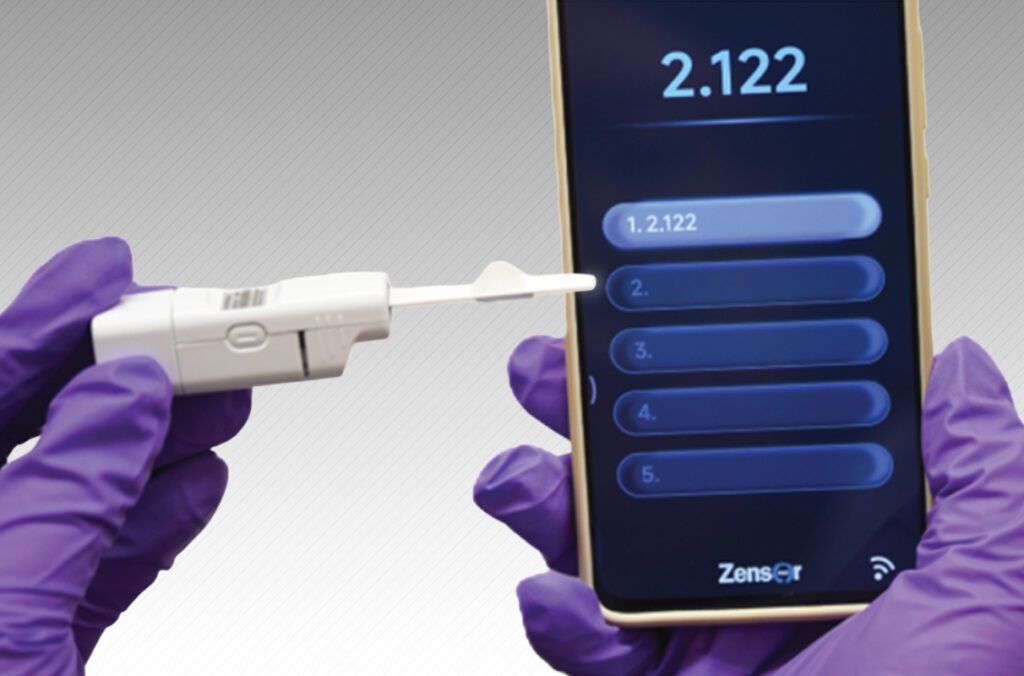
Researchers at Washington State University have developed a wearable microneedle‑based biosensor designed to make glucose monitoring more accurate, less invasive, and more cost‑effective for people with diabetes. The device measures glucose in interstitial fluid using tiny hollow microneedles less than a millimeter long, which extract small amounts of fluid without the discomfort or skin irritation associated with traditional continuous glucose monitors. The sensor then uses enzymatic nanozyme chemistry and a single‑atom catalyst to amplify the glucose signal, enabling highly sensitive detection at low biomarker concentrations.
The team fabricated the device using low‑cost 3D printing, which reduces manufacturing expense and allows for compact integration of the pump, microneedles, and electrochemical sensing components. Once the fluid is collected, the sensor wirelessly transmits glucose readings to a smartphone in real time. Because the measurement occurs outside the body, the system avoids the inflammation and chemical irritation that can occur with implanted sensors. The researchers emphasize that the painless microneedles and externalized chemistry make the device more user friendly and potentially safer for long term use.
The technology is intended to address limitations of current glucose monitors, which can be expensive, uncomfortable, and insufficiently sensitive for some patients. The WSU team has filed a provisional patent and plans to test the device in animal studies while exploring its use for detecting additional biomarkers. They note that the growing demand for continuous glucose monitoring underscores the need for more accessible sensing platforms. By combining microneedle extraction, nanozyme amplification, and wireless data transmission, the new biosensor offers a pathway toward next generation glucose monitoring that is more practical for everyday healthcare.
Article from WSU: New biosensor technology could improve glucose monitoring
Abstract in Analyst: 3D-printed hollow microneedle-based electrochemical sensor for wireless glucose monitoring
