
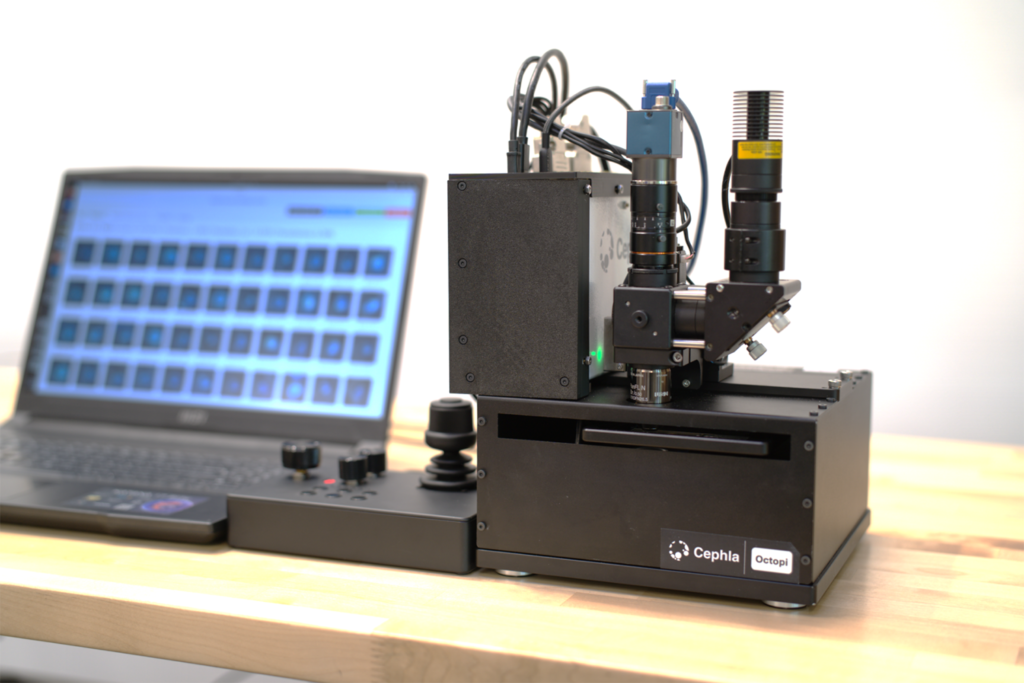
Researchers at Stanford University have developed a low cost, battery or solar powered autonomous microscope called “Octopi” that uses artificial intelligence to diagnose malaria in blood smears with far greater speed and efficiency than manual microscopy. Malaria diagnosis traditionally requires a trained technician to examine slides one by one, a process that can take half an hour per sample and limits throughput to roughly 25 patients per day even under demanding conditions. Octopi replaces this manual workflow with automated slide scanning and AI driven parasite detection, enabling accurate diagnosis within minutes and dramatically increasing the number of patients who can be screened in field environments.
The system is designed specifically for low resource regions where malaria is most prevalent. It operates on batteries or solar power, is relatively inexpensive compared with existing automated microscopes, and is engineered for durability and portability. According to the researchers, Octopi is up to one hundred times more efficient than commonly used alternatives and can autonomously analyze blood samples to identify infected cells among millions. This capability is particularly important in rural clinics where access to trained microscopists is limited and where delays in diagnosis can lead to severe disease progression or death.
Octopi originated in the Prakash Lab as part of a broader effort to create frugal, scalable diagnostic tools. The platform is modular and reconfigurable, allowing it to support additional disease specific imaging modules beyond malaria. Early prototypes and validation studies have demonstrated its potential not only for malaria detection but also for conditions such as tuberculosis and sickle cell disease. The technology has been tested through clinical collaborations across multiple countries in Africa and Asia, reflecting its intended role as a global diagnostic tool.
By automating a process that has historically depended on labor intensive manual microscopy, Octopi offers a path toward earlier and more accurate malaria diagnosis in the regions that need it most. The researchers believe that widespread deployment could save lives by enabling faster treatment and may eventually contribute to broader efforts aimed at reducing or even eliminating malaria transmission.
Article from Stanford University: Affordable microscope speeds up malaria diagnosis with AI
Abstract in medRxiv: Octopi 2.0: Open and Scalable Microscopy Platform for AI-powered Diagnostic Applications
