
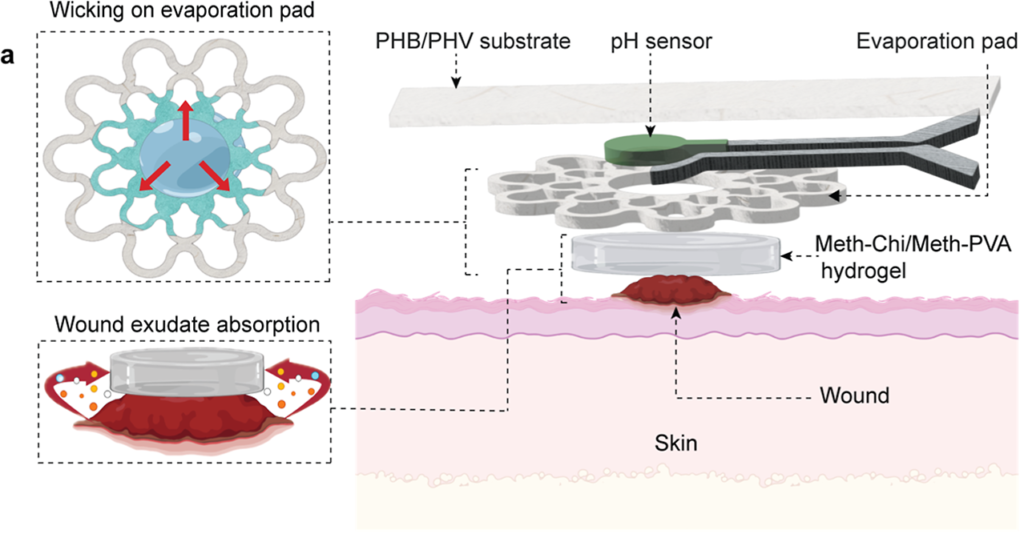
Researchers at Koç University in Turkey have created a specialized wound dressing that incorporates a sensor capable of continuously measuring the pH of the wound environment, offering a new approach to tracking healing in both acute and chronic wounds. The work focuses on the fact that wound pH changes throughout the healing process and can reveal whether tissue is progressing through inflammation, new tissue formation, and remodeling. Chronic wounds often fail to move through these stages, particularly in older adults, and impose a significant burden on healthcare systems. The new dressing is designed to provide real time insight into these chemical changes, helping clinicians intervene earlier and more effectively.
The dressing integrates two key components. A gel based layer sits directly on the wound surface and provides a biocompatible interface for pH sensing. Above it, a thin paper based layer guides fluid transport, ensuring that wound exudate reaches the sensing region. Experimental results showed that the paper layer increased fluid absorption by roughly four times compared to using the gel alone, allowing the sensor to maintain continuous contact with the wound environment. This combined structure supports long term monitoring without requiring frequent dressing changes, which can disrupt healing and cause discomfort.
The materials used in the device include chitosan containing hydrogel and a paper based substrate, both of which are naturally degradable. This makes the dressing more sustainable for single use applications and reduces environmental impact. The researchers emphasize that the simplicity of the materials and fabrication process could support broader adoption in clinical settings.
By enabling continuous pH monitoring, the technology provides a clearer picture of wound status and may help prevent acute wounds from becoming chronic. It also offers a practical tool for managing long term wounds in aging populations. The integration of fluid management and chemical sensing into a single platform represents a meaningful step toward more intelligent wound care systems that can support clinicians and improve patient outcomes.
Article from Koç University: A New Wearable Technology for Monitoring Wound Healing
Abstract in ACS Sensors: Methacrylated Chitosan Methacrylated Poly(vinyl alcohol)-Based Hydrogel Patch for Long-Term Electrochemical Wound pH Sensing
