
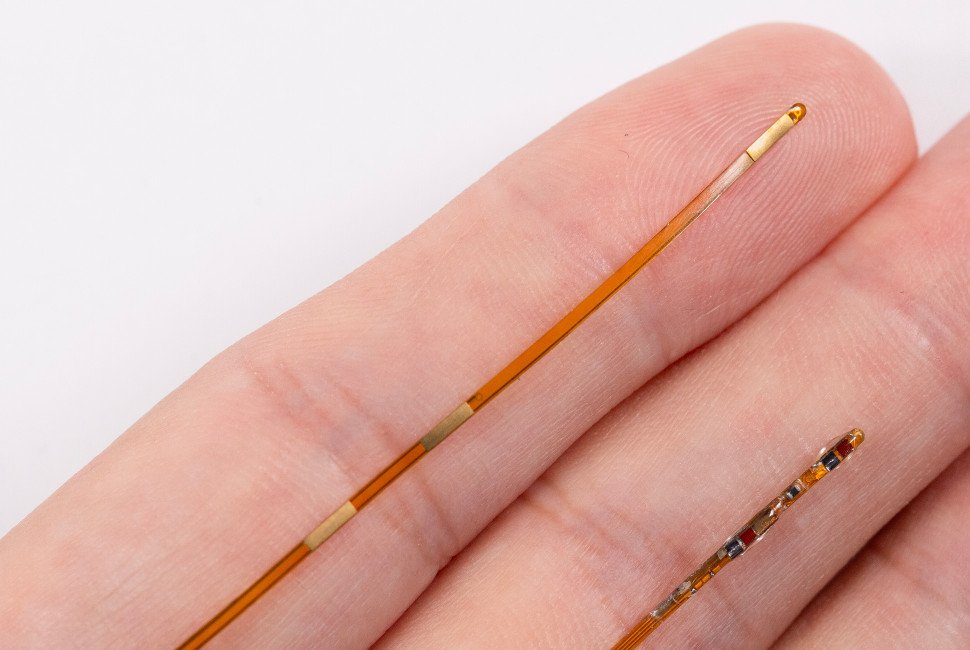
A new soft, hair thin probe developed at Northwestern University is introducing a way to continuously monitor fetal vital signs during in utero surgery, a capability that has not been possible with existing tools. In current procedures, surgeons rely on intermittent ultrasound readings taken from outside the pregnant patient’s body, which can miss rapid changes in fetal condition. The new device is designed to provide uninterrupted measurements of heart rate, blood oxygen levels, and temperature from inside the uterus, offering a more reliable view of fetal well being throughout surgery.
The probe is thin enough to pass through the same small port already used for fetoscopic instruments, avoiding the need for additional incisions. Once inside the uterus, the device gently maintains contact with the fetus using a soft, balloon like interface that conforms to the moving surface of the body. This design allows the probe to remain stable even as the fetus shifts position, which has been a major barrier to continuous monitoring in the past.
The system integrates miniature sensors capable of capturing vital signs with high accuracy. In large animal testing, the probe remained securely positioned and delivered consistent measurements throughout the procedure. These tests demonstrated that the device can withstand the dynamic environment of the uterus while maintaining safe, non damaging contact with fetal tissue. The researchers emphasize that the probe’s softness and flexibility are essential for preventing injury and ensuring compatibility with delicate fetal structures.
Article from Northwestern University: First-of-its-kind probe monitors fetal health in utero during surgery
Abstract in Nature Biomedical Engineering: A filamentary soft robotic probe for multimodal in utero monitoring of fetal health
