
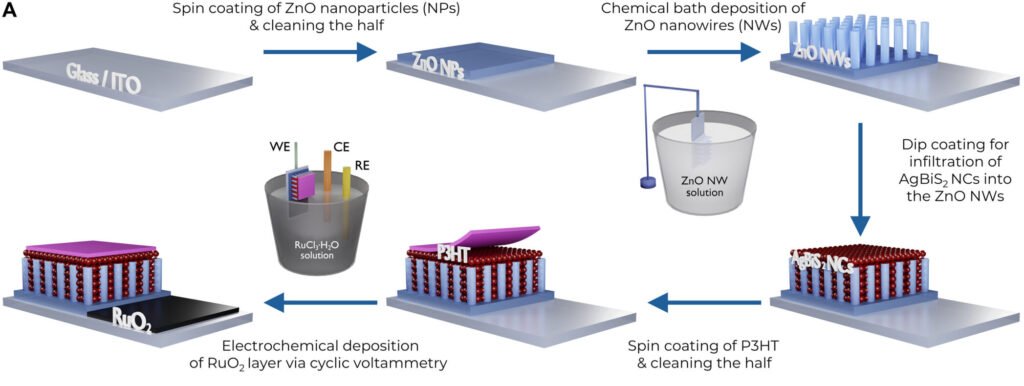
A research team at Koç University in Istanbul, Turkey has developed a wireless, light driven optoelectronic stimulation technology designed to help people with retinal degenerative diseases that currently have no curative treatment. Retinal degeneration affects millions worldwide and leads to progressive vision loss as photoreceptor cells deteriorate. Existing retinal implants face significant limitations because they rely on bulky components, complex wiring, or high intensity visible light, all of which can restrict clinical usability. The newly developed system aims to overcome these barriers by providing a safer, more efficient, and more flexible method of stimulating surviving retinal neurons.
The research centers on creating an ultrathin, wireless platform capable of converting external light into electrical signals that can activate retinal cells. By using near infrared light rather than visible light, the system reduces the risk of phototoxicity and allows deeper penetration into tissue. The device integrates nanoscale materials engineered to respond efficiently to low intensity illumination, enabling stimulation without the heat buildup or energy demands associated with earlier technologies. This approach supports a more naturalistic and comfortable experience for potential users, as it avoids the need for external cables or high power light sources.
The team emphasizes that the technology is designed to be both safe and scalable. Its thin, flexible structure allows it to conform to the curvature of the retina, improving contact and reducing mechanical strain. The wireless operation eliminates the need for implanted batteries or transcutaneous connectors, which can introduce infection risks or require additional surgeries. By focusing on materials and architectures that are compatible with biological tissue, the researchers aim to create a platform that can be adapted for long term use. The work represents a significant step toward retinal prostheses that are less invasive and more practical for everyday life.
The development also reflects a broader effort to advance neural stimulation technologies that rely on light rather than electrical wiring. Light driven systems can offer greater spatial precision and reduced hardware complexity, making them attractive for treating neurological conditions beyond retinal disease. The research team notes that the principles demonstrated here may eventually support new therapeutic strategies for other forms of neural degeneration. By combining wireless operation, low intensity light activation, and biocompatible materials, the technology provides a foundation for future clinical translation.
