
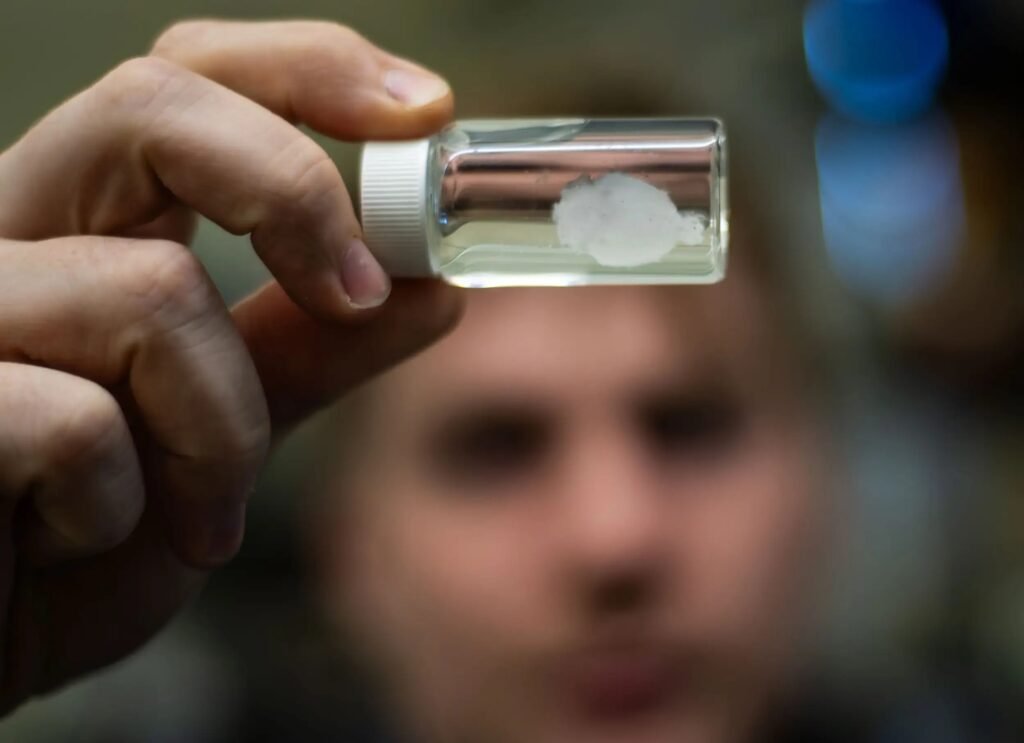
A research team at Virginia Commonwealth University is developing highly realistic hydrogel based rat brain models to better understand how physical forces travel through brain tissue during traumatic events. This work focuses on the physics of traumatic brain injury, an area where the biological consequences are well documented but the underlying mechanical forces remain difficult to measure directly. By creating soft, anatomically accurate phantoms that mimic the mechanical behavior of real brain tissue, the team aims to generate controlled, repeatable data that can clarify how impacts translate into tissue deformation and potential damage.
The hydrogel models are designed to replicate the softness, elasticity, and structural characteristics of rat brains, allowing researchers to simulate impacts and measure how force propagates through the tissue. These controlled experiments make it possible to study injury mechanisms that cannot be observed in living subjects, providing insight into how different types of impacts may contribute to cellular injury, inflammation, or long term neurological effects.
The team uses these phantoms to test a range of impact scenarios, adjusting material properties and structural features to match specific research needs. By refining the models, the researchers can explore how variations in force, direction, and duration influence the resulting mechanical response. This approach supports the development of more accurate computational models and helps validate measurement techniques that could eventually be applied to human scale systems. The long term goal is to build toward larger, more complex brain models that capture the nuances of human anatomy and injury patterns.
The work also has practical implications for improving protective equipment and diagnostic tools. Understanding how force moves through brain tissue can inform the design of helmets, vehicle safety systems, and other protective technologies. It may also support the development of more sensitive diagnostic methods that detect subtle injuries earlier. By focusing on the mechanical foundations of traumatic brain injury, the research provides a pathway toward better prevention, assessment, and treatment strategies.
The hydrogel brain models represent a step toward bridging the gap between laboratory research and real world injury scenarios. By creating a platform that allows precise measurement of force transmission, the team is contributing to a deeper understanding of how traumatic brain injuries occur and how they might be mitigated. The work reflects a commitment to advancing both scientific knowledge and practical solutions for a major public health challenge.
