
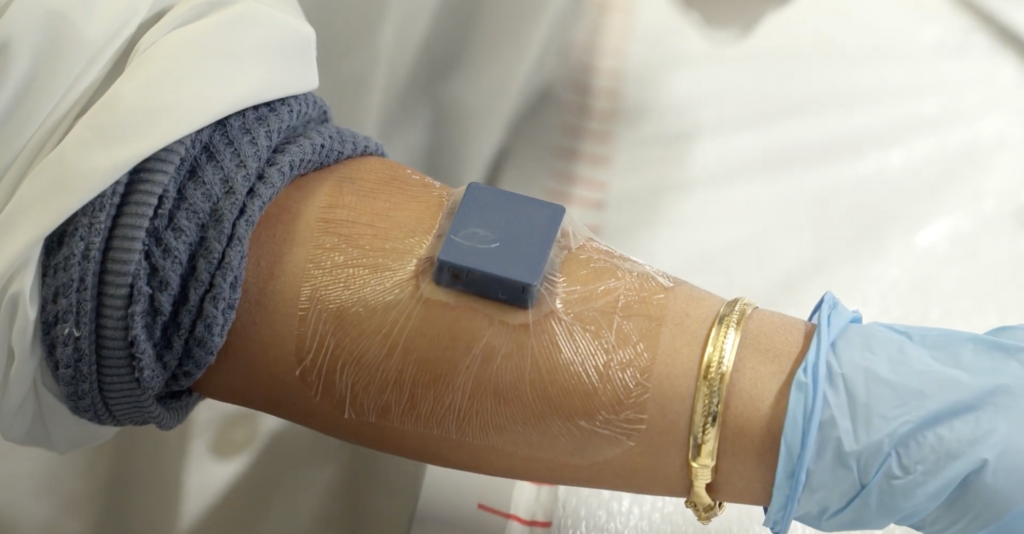
Scientists at the University of Texas at Dallas, in collaboration with Texas based company EnLiSense, have developed a wearable sensor that measures two key hormones in sweat to better understand the body’s sleep wake cycle. The device continuously tracks cortisol, which is associated with alertness and stress, and melatonin, which signals the body to prepare for sleep. Unlike most consumer sleep trackers that rely on motion or heart rate as indirect indicators, this sensor directly measures biochemical signals, offering a more precise window into circadian rhythms and sleep quality.
The sensor uses an electrochemical system to detect very low concentrations of these hormones in perspiration. In a proof of concept study, the researchers showed that the device can capture dynamic changes in cortisol and melatonin over time, aligning with expected daily patterns. Because the system is noninvasive and designed for continuous wear, it could be used in everyday settings rather than only in controlled laboratory environments. This opens the door to long term monitoring of sleep and stress in real life conditions, including for people with insomnia, shift work related circadian disruption, or chronic stress.
By providing real time hormone data, the technology could help clinicians and users identify misalignments between internal biological rhythms and external schedules, and then tailor interventions such as light exposure, behavioral changes, or medication timing. The work also illustrates a broader trend toward biochemical wearables that go beyond movement tracking to measure molecules directly related to health and disease. If further validated and refined, sweat based hormone sensors like this one could become powerful tools for personalized sleep management and for understanding how stress and lifestyle factors shape circadian health over time.
Take a look at this video that shares more about the sensor:
Article from UT Dallas: Researchers’ Sweat-Based Sensor May Help Improve Sleep Quality
Abstract in Biosensors and Bioelectronics: X: CIRCA: Circadian inference of rhythmicity using comparative analysis from non-invasive continuous measurements of cortisol and melatonin in passive perspiration
