
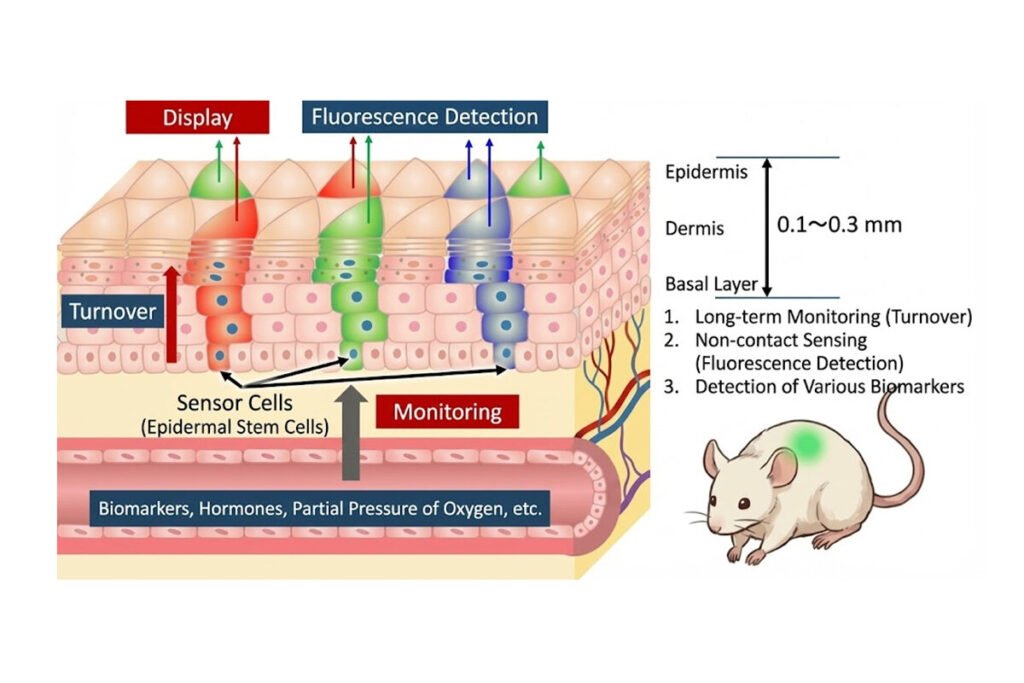
Researchers at the Institute of Industrial Science at the University of Tokyo have developed an engineered skin graft that functions as a living sensor display. The graft fluoresces in response to internal biomarkers such as inflammation, allowing long‑term monitoring of biological states without the need for blood sampling.
The team created the sensor by engineering epidermal stem cells so that they activate a fluorescent signal when specific molecular pathways associated with inflammation are triggered. When transplanted onto immunodeficient mice, the graft remained stable over long periods and reliably increased or decreased fluorescence in response to inflammatory stimuli. This demonstrated that the engineered skin can act as a persistent, responsive indicator of internal physiological changes.
Because the skin naturally renews itself, the sensor function is maintained over time, and the system can respond repeatedly to changing biomarker levels. The researchers note that by modifying the receptors or genetic circuits involved, the platform could be adapted to detect a wide range of molecular signals beyond inflammation. Potential applications include continuous at‑home monitoring for older adults or people with chronic diseases, as well as veterinary and livestock health tracking.
The work represents a shift from external wearables toward biohybrid internal monitoring, where the body itself becomes the display. The study highlights how engineered tissues could eventually support long‑term, non‑invasive health monitoring in ways that traditional sensors cannot
Article from the Institute of Industrial Science at the University of Tokyo: Glow with the flow: Implanted “living skin” lights up to signal health changes
Abstract in Nature Communications: Living sensor display implanted on skin for long-term biomarker monitoring
