
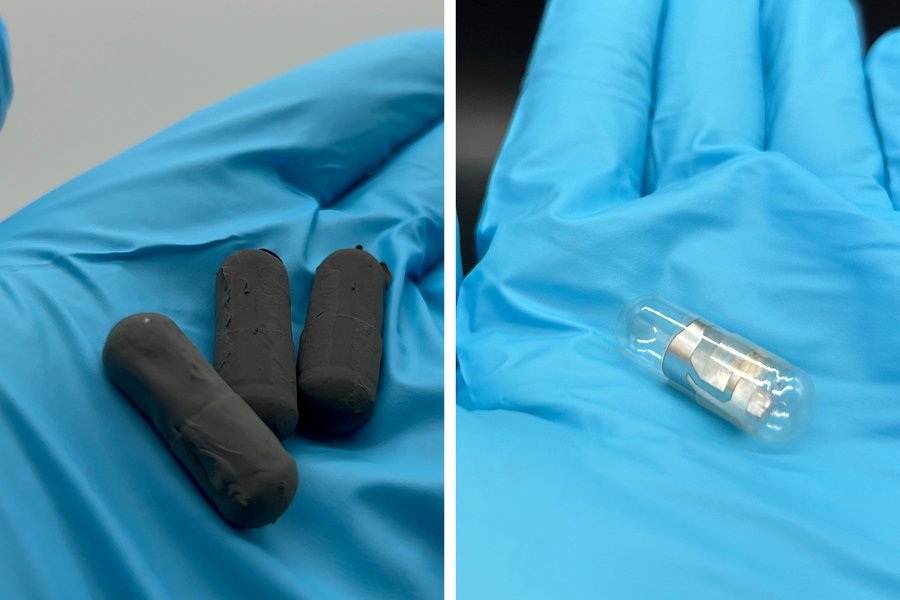
MIT engineers have developed a new type of ingestible capsule that can send a signal from inside the stomach to confirm that a medication has been swallowed. The technology is designed to address a long‑standing challenge in medicine: ensuring that patients take their medications consistently and on schedule. Poor adherence is a major barrier to effective treatment for many conditions, including chronic infections and diseases that require strict dosing routines. The MIT team created a system that works within the familiar format of a standard pill capsule while adding a simple way to verify ingestion in real time.
The capsule contains a biodegradable radio frequency antenna that activates once the pill reaches the stomach. The outer coating, made from a gelatin‑based material similar to that used in many existing medications, dissolves after swallowing. When this coating breaks down, the antenna is exposed to stomach fluids and emits a short radio signal. This signal can be detected by a small wearable receiver outside the body, confirming that the pill has been taken. After transmitting the signal, the antenna and other components break down naturally in the stomach, while a tiny radio frequency chip passes through the digestive system without requiring retrieval.
One of the key advantages of the system is its compatibility with existing pharmaceutical manufacturing processes. The capsule can be integrated into standard pill formats without requiring major changes to how medications are produced. This makes it easier to imagine how the technology could be adopted for a wide range of treatments. The researchers note that the system could be especially valuable for patients who must follow strict medication schedules, such as individuals taking immunosuppressive drugs after organ transplantation or those undergoing long‑term therapy for infections like HIV or tuberculosis.
The study describes how the team tested the capsule’s ability to send reliable signals from the stomach and evaluated the safety of its biodegradable components. The researchers emphasize that the materials were chosen to break down safely in the digestive environment, reducing the risk of accumulation or long‑term retention. They also highlight that the capsule is designed to send only a simple confirmation signal rather than transmit continuous data, which helps minimize power requirements and simplifies the device’s design.
By creating a pill that can communicate from inside the body, the MIT team hopes to support more effective treatment plans and reduce the risks associated with missed doses. The technology represents a step toward medication systems that can verify adherence without requiring patients to change their routines or use complex external devices. If further developed and validated, these smart capsules could help clinicians monitor treatment progress more accurately and intervene earlier when adherence becomes a concern.
Article from MIT: Pills that communicate from the stomach could improve medication adherence
Abstract in Nature Communications: Bioresorbable RFID capsule for assessing medication adherence
