
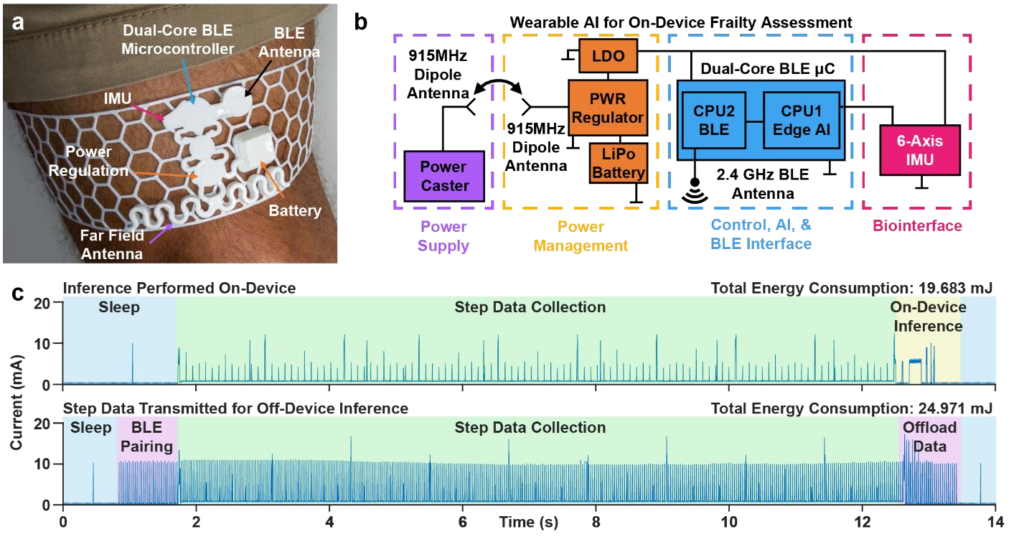
Researchers at the University of Arizona have developed a soft, comfortable wearable device that uses artificial intelligence to detect early signs of frailty, a condition that significantly increases the risk of falls, hospitalization, and loss of independence among older adults and people with disabilities. Frailty is common but often underdiagnosed because it is usually assessed only after a major adverse event has already occurred. The team’s goal is to shift care from reactive to preventative by enabling continuous monitoring in everyday life.
The device takes the form of a soft mesh sleeve worn around the lower thigh. It continuously monitors gait patterns, which are strong indicators of frailty risk. Embedded AI models analyze movement data directly on the device, allowing it to detect subtle changes without relying on constant connectivity, cloud processing, or large data transfers. This design addresses a major limitation of many digital health tools, which often require frequent charging or continuous data streaming to external systems.
Researchers emphasized that current care models often wait for a fall or hospitalization before evaluating frailty. They noted that the team wanted to create a system that identifies risk earlier, enabling clinicians and caregivers to intervene before a serious event occurs. They highlight that frailty is a major but frequently overlooked risk factor for poor health outcomes. By enabling continuous, unobtrusive monitoring in real‑world settings, the wearable could help clinicians track changes over time and support safer, more independent aging. The device’s ability to operate without heavy data demands or constant charging makes it more practical for long‑term use, especially for older adults who may not be comfortable with complex technology.
Article from the University of Arizona: AI-powered wearable boosts preventative care for elderly
Abstract in Nature Communications: Wearable AI for on-device frailty assessment
