
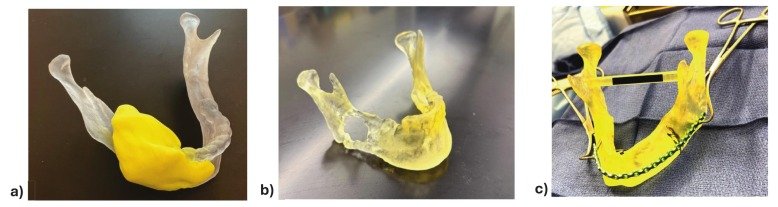
Head and neck cancers that invade bone are among the most difficult to treat surgically, because surgeons must balance complete tumor removal with preserving critical functions like speech, chewing, and swallowing. At The Ohio State University Comprehensive Cancer Center – Arthur G. James Cancer Hospital and Richard J. Solove Research Institute, researchers have shown that patient‑specific 3D‑printed models can improve this balance.
In a study of 68 patients, 37 surgeries used custom 3D models created by the Medical Modeling, Materials and Manufacturing Lab. These models provided surgeons with a detailed, tangible guide to the patient’s anatomy and tumor location. The results were striking: 92 percent of patients in the 3D‑model group had complete tumor removal, compared to 74 percent in the group without models.
The researchers explained that the models allow surgeons to visualize and plan complex resections with greater accuracy, reducing the risk of leaving behind cancerous tissue. They noted that the models also help preserve healthy bone and tissue, which is essential for maintaining quality of life after surgery.
The study demonstrates how 3D printing can directly improve surgical outcomes. The team hopes to expand the use of this technology to other areas, including orthopedic surgery, where precision is equally critical.
Article from tOSU: Custom 3D-printed models improve precision of cancer removal
Abstract in Oral Oncology: In-house 3D modeling associated with margin-negative resection in mandibular oral cavity malignancies
