
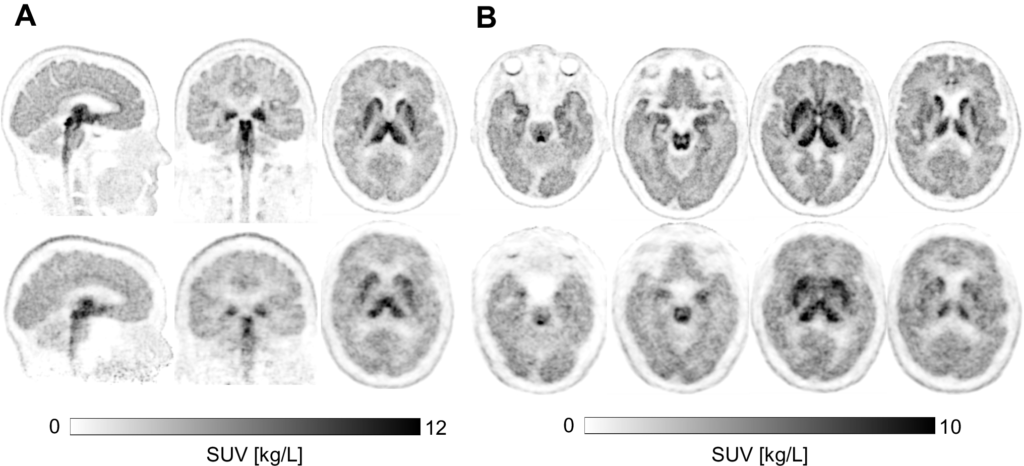
At the Yale School of Medicine, researchers are testing the “NeuroEXPLORER” (NX), an ultra high‑performance brain‑dedicated PET scanner that is redefining what is possible in brain imaging. Installed in 2023, the NX offers ten times the sensitivity and more than twice the spatial resolution of the previous state‑of‑the‑art scanner, enabling visualization of brain structures that were previously invisible.
The NX allows scientists to study conditions such as Alzheimer’s disease, Parkinson’s disease, and brain cancer with unprecedented detail. In recent studies, the scanner revealed small structures like the mammillothalamic tract and substantia nigra, which play key roles in memory and movement. This level of resolution could support earlier diagnosis and more precise monitoring of disease progression.
Another breakthrough is the NX’s ability to derive blood activity directly from images, reducing the need for invasive arterial blood sampling. This innovation simplifies quantitative PET research and makes studies more comfortable for patients.
The scanner’s design includes a longer field of view, smaller detector crystals, and depth‑of‑interaction technology, all contributing to sharper images and reduced radiation doses. Lower radiation exposure opens the door to studying adolescent brain development, a critical area for understanding conditions like autism and schizophrenia.
Researchers believe the NX could also help distinguish between recurrent brain tumors and treatment‑induced inflammation, a challenge in oncology. By tracking neurotransmitters and synapses simultaneously, the scanner may provide new insights into how neurodegenerative diseases progress.
Article from Yale School of Medicine: Powerful New Brain PET Scanner Is Opening New Research Pathways
Abstract in European Journal of Nuclear Medicine and Molecular Imaging: Exceptional brain PET images from the NeuroEXPLORER: scans with targeted radiopharmaceuticals and comparison to HRRT
Abstract in Journal of Nuclear Medicine: Carotid Artery Image-Derived Blood Time–Activity Curves on the NeuroEXPLORER: Initial Multitracer Validation Against Arterial Sampling
