
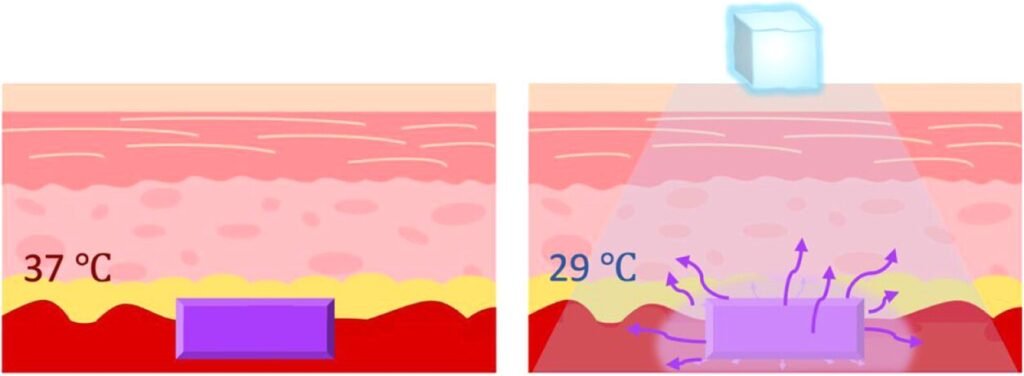
Researchers at Vanderbilt University have developed an innovative drug delivery mechanism that responds to cooling. The system uses a thermoresponsive hydrogel implant that releases medication when exposed to lower temperatures. This approach could allow patients to receive pain relief on demand without relying on systemic opioids.
Currently, most on‑demand pain treatments involve opioids, which are highly addictive and contribute to thousands of deaths each year. The Vanderbilt team designed a composite device made from alginate and Soluplus polymers that encapsulates celecoxib, a nonsteroidal anti‑inflammatory drug (NSAID). When the implant is cooled, the hydrogel structure changes, triggering controlled drug release.
The study demonstrates that cooling can serve as a safe and convenient trigger for localized therapy. Unlike systemic opioids, this method delivers medication directly at the site where it is needed, reducing risks of addiction and side effects. The researchers envision applications for both acute and chronic pain management, particularly in cases where patients require precise, localized relief.
This cooling‑triggered platform highlights how responsive biomaterials can transform drug delivery. By designing implants that react to external stimuli such as temperature, scientists can create smarter, patient‑controlled therapies. The work also underscores the importance of developing alternatives to opioids, offering hope for safer pain management strategies in the future.
Article from Vanderbilt University: Innovative drug delivery mechanism triggered by cooling could provide targeted pain relief
Abstract in ACS Biomaterials Science & Engineering: Cooling-Triggered Release of Celecoxib from Implantable Alginate-Soluplus Composite Devices
