
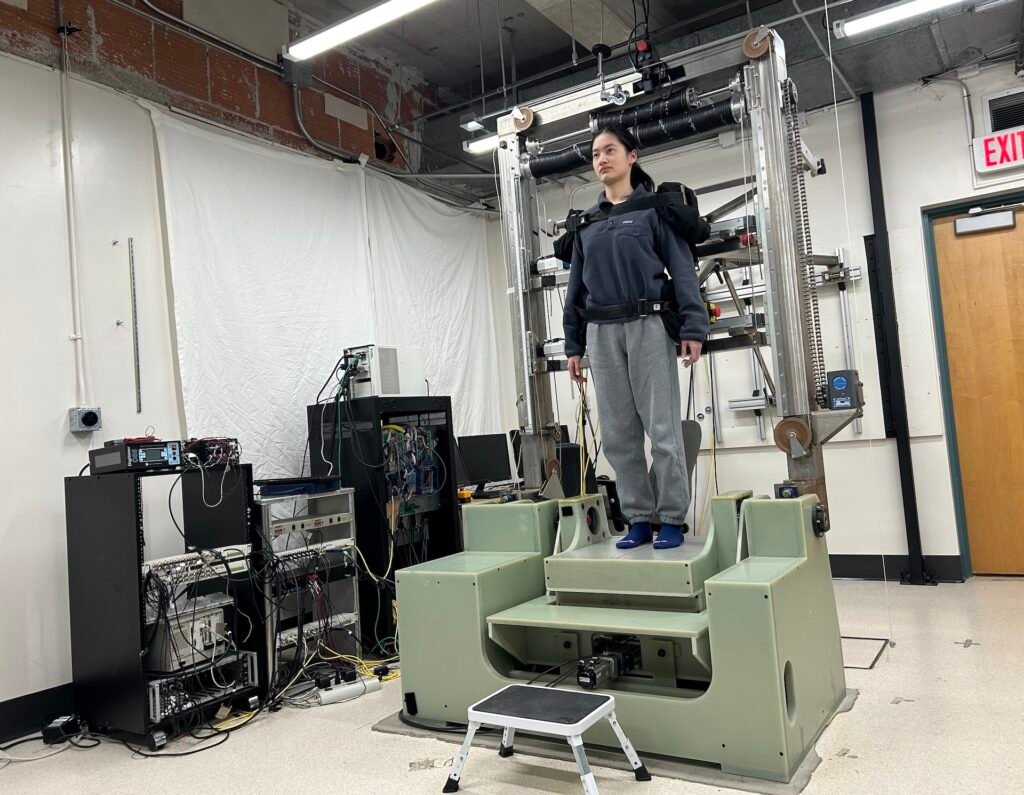
Scientists at the University of British Columbia have built a robotic platform that shows how the brain keeps us upright. The device, described as a “body‑swap” robot, can alter the forces involved in standing balance and introduce short delays in feedback. By doing so, it reveals how the brain interprets both space and time to maintain stability.
Standing requires constant coordination of signals from the eyes, inner ears, and feet. These signals naturally arrive with slight delays, and aging or disease can make the lag worse, increasing the risk of falls. The UBC robot reproduces forces such as gravity, inertia, and viscosity, then tweaks them in real time. Participants standing on the platform experienced changes that made their bodies feel heavier, lighter, or delayed in response.
In experiments, adding a delay caused participants to sway dramatically, while altering body mechanics produced similar instability. This showed that the brain treats delayed feedback much like altered physical properties. In a final test, researchers boosted inertia and viscosity to compensate for delays, and participants regained control, reducing sway significantly.
The findings suggest new ways to prevent falls. Future tools could include wearable devices that add gentle resistance when someone starts to lose balance or robotic trainers that teach patients to adapt to slower feedback. The same insights could help engineers design humanoid robots that balance more effectively.
Article from UBC: UBC ‘body-swap’ robot helps reveal how the brain keeps us upright
Abstract in Science Robotics: Robotic manipulation of human bipedalism reveals overlapping internal representations of space and time
