
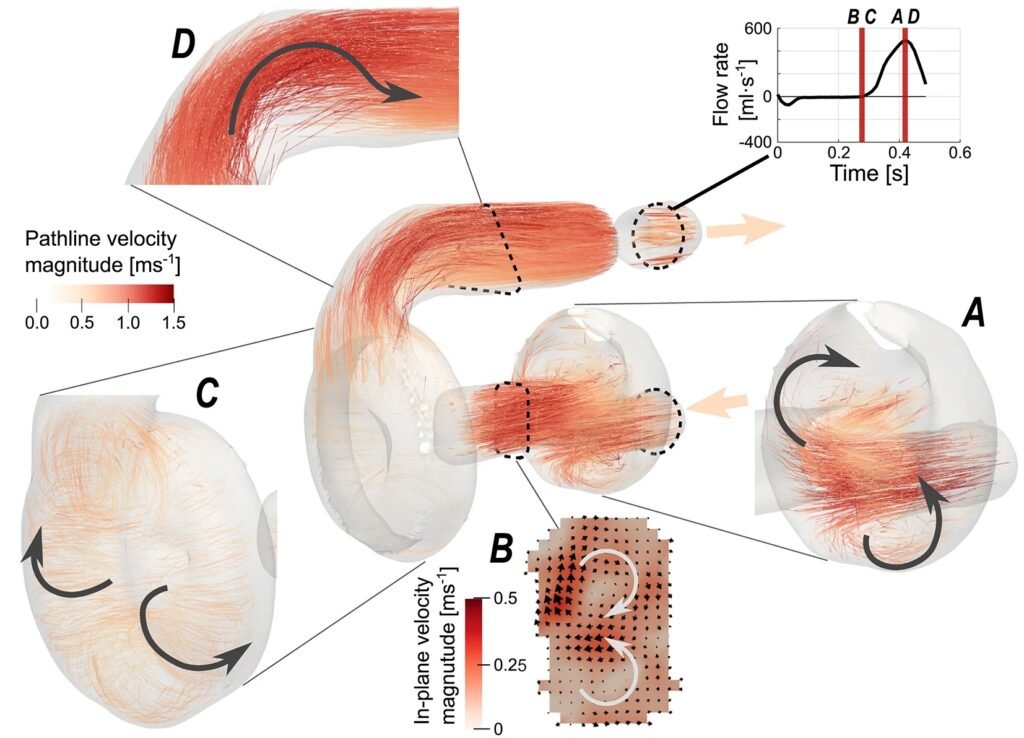
Designing a mechanical heart that mimics the natural flow of blood is no small feat. At Linköping University in Sweden, researchers have used advanced imaging techniques to study blood movement inside a pulsating artificial heart. This work is helping engineers refine the device to reduce complications such as blood clots and red blood cell damage.
The team partnered with Scandinavian Real Heart AB and used magnetic resonance imaging to observe how blood flows through the artificial heart in real time. By comparing these patterns to those in a healthy human heart, they identified areas where turbulence or stagnation could pose risks. Encouragingly, the device showed flow characteristics similar to natural cardiac function, suggesting it could serve as a temporary solution for patients awaiting transplants.
The artificial heart has received a Humanitarian Use Device designation from the US Food and Drug Administration, which could speed up its path to clinical use. Researchers hope to eventually develop a permanent version that eliminates the need for donor organs. Their focus is on improving mechanical efficiency and safety, ensuring the device supports circulation without damaging blood components.
Published in Scientific Reports, the study highlights how visualization tools can guide the design of complex medical technologies. The researchers plan to continue refining the heart’s structure and testing its performance under various conditions. Their goal is to create a durable, biocompatible solution for long-term cardiac support.
This project underscores the importance of combining engineering, imaging, and clinical insight to develop life-saving devices. As artificial hearts become more advanced, they may offer new options for patients with severe heart failure and reduce dependence on organ donation. The Linköping team’s work contributes to a growing field focused on creating reliable alternatives to traditional heart transplants.
Article from Linköping University: Visualisation of blood flow sharpens artificial heart
Abstract in Scientific Reports: 4D flow MRI enhances prototype testing of a total artificial heart
